Finished Is a Feature: Why Digital Sculptors Need to Stop Hoarding Their Work
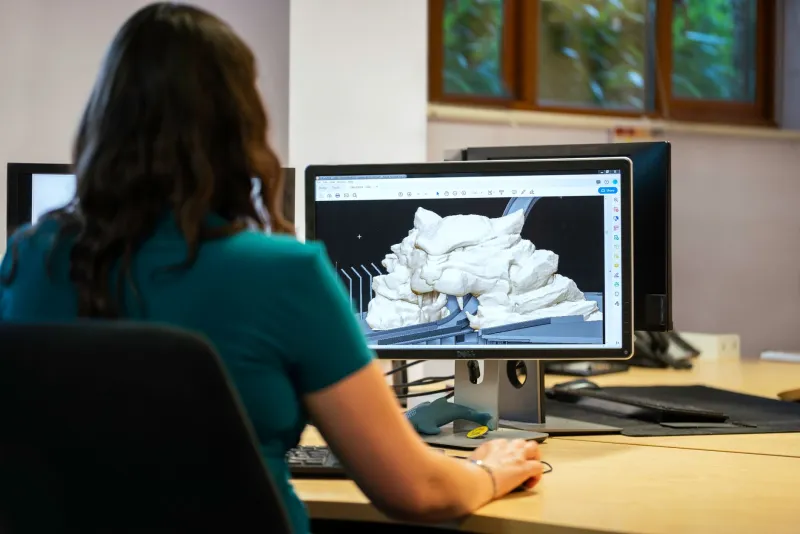
Somewhere on your hard drive, there's a graveyard. You know the one. A folder full of sculpts that got to 85%, 90%, maybe 97% of the way there — and then just... stopped. A creature bust with insane skin detail that you never posted because the ear topology felt off. A stylized character you poured three weekends into that's been sitting in a WIP folder since last spring.
You're not alone. This is one of the most common — and least talked about — patterns in the digital sculpting world. And it's quietly costing artists more than they realize.
The Myth of the Perfect Post
Here's the thing about perfectionism in digital art: it has almost unlimited ammo. Unlike a traditional clay sculptor who eventually runs out of material to push around, you can always zoom in further, add another subdivision level, tweak a normal map, adjust the lighting one more time. The tools literally never stop you from iterating.
That's powerful. It's also a trap.
When there's no physical constraint forcing you to call something done, the decision becomes psychological. And for a lot of sculptors — especially those who've been in the craft long enough to know what great looks like — the internal critic gets louder the closer you get to finishing. You start comparing your work to the polished renders on ArtStation, to the breakdowns from Naughty Dog artists, to the stuff getting 50,000 likes on Instagram. And suddenly your sculpt feels inadequate.
That's not quality control. That's imposter syndrome wearing a quality-control costume.
What You're Actually Losing
Let's be direct about what staying stuck costs you.
First, there's the portfolio problem. Hiring managers, art directors, and freelance clients can only evaluate work they can see. A technically impressive sculpt that never gets posted might as well not exist. The artist who publishes something at 90% polish beats the artist who never publishes their 99% piece — every single time — because one of them actually has a portfolio.
Second, you're losing feedback that would make your next piece better. Critique stings, sure. But the alternative — working in a vacuum, endlessly refining in private — means you're only ever accountable to yourself. And your internal critic, as we've established, isn't exactly a neutral judge.
Third, and this one's more subtle: unfinished work accumulates psychic weight. Every project you never close out becomes a small, nagging reminder of something you didn't do. That mental overhead adds up. It's harder to start fresh when you're dragging a cemetery of half-done projects behind you.
The Fear Behind the Folder
So why do sculptors really hold back? Ask most of them and they'll tell you technical reasons — the rig isn't clean, the render needs work, the composition is off. But push a little deeper and something else usually surfaces.
Fear of being seen accurately. When you post work, people see you — your current skill level, your blind spots, your aesthetic sensibilities. That's vulnerable, especially when your identity is tied up in being a good artist. Keeping work private is a way of protecting a self-image that hasn't been tested yet.
Fear of the gap between taste and ability. If you've been sculpting long enough to develop strong opinions about what great work looks like, you've probably also developed a painful awareness of where your own work falls short. That gap is real, and it's uncomfortable. But here's the thing — the gap only closes through reps, and reps require finishing and shipping.
Fear of permanence. Posting something makes it real. It timestamps your current skill level in a public, searchable way. Some artists find that deeply uncomfortable, especially if they feel like they're still becoming the artist they want to be.
Practical Ways to Break the Cycle
None of this is fixed by just deciding to care less. But there are concrete shifts that help.
Set a ship date, not a finish line. Instead of asking "is this done?" ask "when does this go out?" Give yourself a deadline — a real one, on a calendar — and treat it like a client deliverable. The work that exists on the day of that deadline is the work that ships.
Decouple posting from perfection. Start thinking of your portfolio as a living document rather than a greatest-hits album. Plenty of respected artists post work-in-progress shots, studies, and experiments alongside polished pieces. It humanizes the process and takes the pressure off any single post being definitive.
Create a 'good enough' checklist. Define in advance what makes something postable — not perfect, just postable. Maybe that's: clean silhouette, intentional surface detail, a render that reads clearly. Anything that clears those bars gets out the door. Anything below gets more time. That's it.
Use community accountability. Discord servers, subreddits like r/ZBrush, and platforms like ArtStation all have spaces for WIP posts and feedback threads. Committing publicly to a finish date — even in a low-stakes comment thread — creates external pressure that internal motivation can't always generate.
Do a graveyard audit. Seriously. Open that folder. Look at what's in there. Some of it won't be worth salvaging, and that's fine. But some of it — probably more than you think — is close enough to post with a bit of focused effort. Pick one. Finish it this week. Just one.
Shipping Imperfect Work Is a Skill
This might be the most counterintuitive thing about creative careers: learning to release work before it feels ready is itself a discipline. It doesn't mean lowering your standards. It means recognizing that standards are raised through iteration and feedback, not through endless private refinement.
Every professional sculptor you admire has posted work they later cringed at. Every one of them. The difference between them and the artists still sitting on their best work isn't talent — it's that they kept shipping anyway.
Your graveyard doesn't have to stay a graveyard. Pick something. Finish it. Post it. The next sculpt will be better because you did.