Performing the Polygon: What Live Sculpting Streams Do to the Work Itself
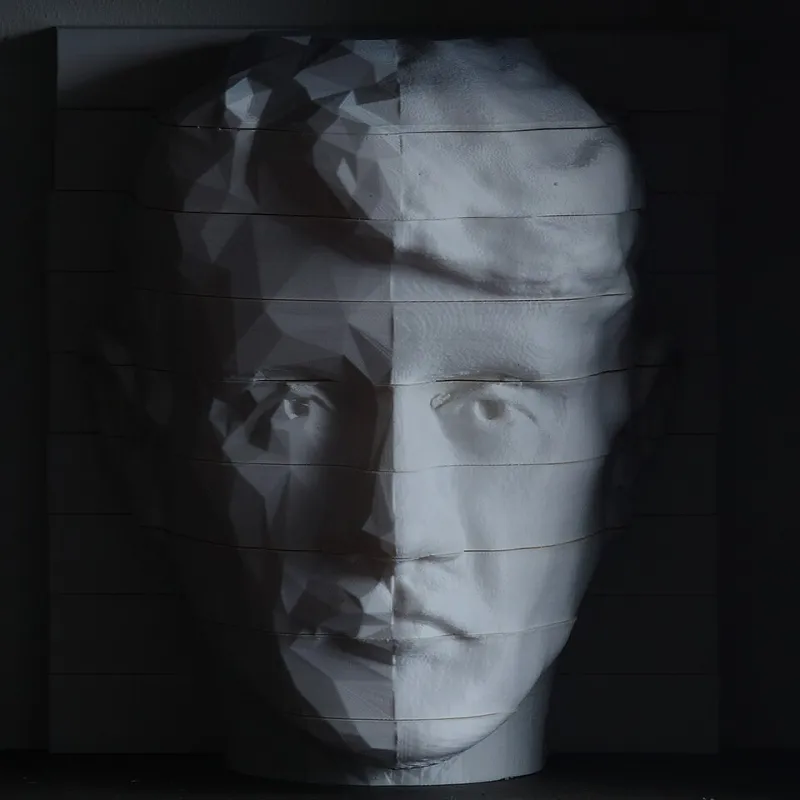
Photo: Focus mankind (Ivo Meier, Schweiz) (external Link: https://www.ivomeier.art ), CC BY-SA 4.0, via Wikimedia Commons
There's a particular kind of silence that used to define digital sculpting. You, the tablet, and whatever grotesque creature was slowly emerging from a sphere. That silence is disappearing. Scroll through Twitch or YouTube right now and you'll find artists sculpting live for hundreds — sometimes thousands — of viewers, narrating every brushstroke, every topology panic, every 2 a.m. decision to scrap the face and start over.
It's one of the most interesting shifts happening in the digital art community, and like most interesting shifts, it's complicated.
The Audience in the Room
Talk to streamers who sculpt live and one theme comes up again and again: the chat changes you. Not dramatically at first. But there's a low hum of awareness — thousands of people watching — that nudges your decisions in small ways.
Several artists we spoke with admitted they avoid experimental techniques on stream. Why? Because experiments fail, and failure on stream means dead air, awkward silences, or worse, a viewer typing "this looks worse than yesterday." When your process is entertainment, the safest path is often the one you've already mastered.
That's the core tension. The very thing that makes live sculpting compelling — real, unpolished creation — is also what makes streamers risk-averse. You can't spend forty minutes silently staring at a silhouette when the algorithm wants engagement.
The Case For Broadcasting Everything
But here's the other side, and it's not small. Live sculpting is doing something tutorials never could: showing the mess.
Recorded tutorials are edited, curated, and finished. They show you the winning path. Streams show the losing ones too — the twenty attempts at an ear, the anatomy references pulled up mid-sculpt, the honest admission of "I don't know why this looks off." For beginners, that's gold. Watching a skilled artist struggle in real time normalizes struggle, which might be the single most important lesson an intermediate sculptor can learn.
There's also the community effect. Digital sculpting can be an isolating discipline, especially for freelancers working from a spare bedroom in Ohio or a studio apartment in Austin. Streams build something rare: a recurring room where people who care about subtools and dynamesh gather weekly. For platforms and communities built around 3D art, that's not a trend to watch. That's the future of how creative skills actually spread.
The Entertainer's Tax
Still, the pressure to perform is real, and it has a cost structure. Streamers describe a kind of split-brain existence: half artist, half talk-show host. Every brush decision gets narrated, justified, and timed. Some artists report that their best work happens off-stream, in the hours nobody sees — and they've started guarding those hours like a pro athlete guards practice reps.
Others have found workarounds. Scheduled "lab sessions" with no chat. Streaming finished-piece breakdowns instead of live creation. One character artist told us she streams the boring parts — UVs, base meshing — and saves exploratory sculpting for offline. It's a conscious firewall between performance and practice.
So Does the Audience Change the Art?
Honestly? Yes. But maybe not the way you'd fear.
The artists who seem to thrive long-term aren't the ones who bend their work to the chat. They're the ones who've made their process transparent without making it compliant. They sculpt what they'd sculpt anyway, and the audience gets a front-row seat to genuine craft — including the failures.
If you're thinking about streaming your sculpting, that's probably the healthiest framing available: the stream is a window, not a steering wheel. The moment the audience starts picking your brushes, you're not a sculptor anymore. You're a hostage with a graphics tablet.
The silence is gone from digital sculpting. What replaces it — community or compromise — depends entirely on who's holding the stylus.