More Polygons, Less Impact: The Surface Detail Mistakes Killing Your Sculpts
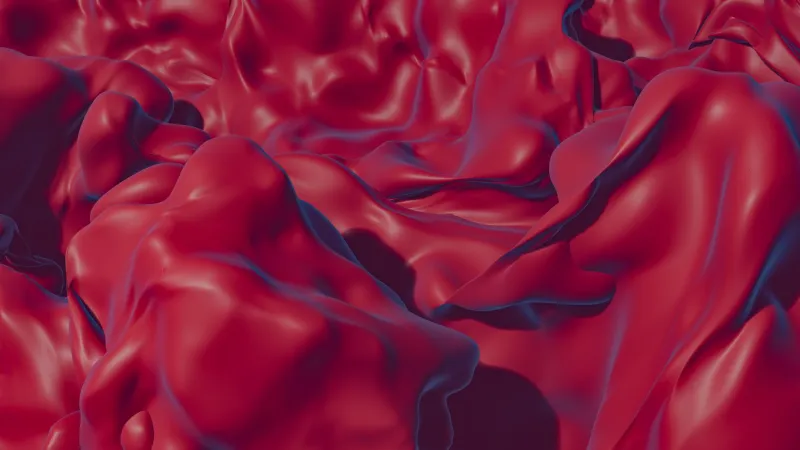
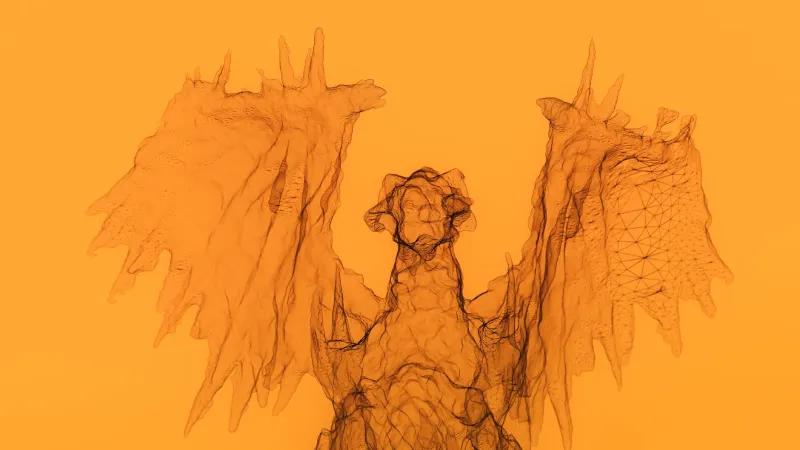
There's a moment every digital sculptor knows too well. You've pushed your mesh to several million polygons, spent hours refining every pore and wrinkle, and then you drop the model into a render — and it looks... fine. Not stunning. Not professional. Just fine. The geometry is all there, technically speaking, but something essential is missing.
Here's the uncomfortable truth the polygon count obsession tends to bury: geometry is a foundation, not a finish line. The artists whose work stops people mid-scroll aren't necessarily working with denser meshes. They're working smarter with surface detail strategy — and if that phrase sounds vague right now, stick around.
The Polygon Count Myth
The idea that more geometry automatically equals better output is one of the most persistent misconceptions in the 3D community. It makes intuitive sense on the surface — more detail means more data, which should mean more realism, right? But that logic breaks down fast when you look at how the human eye actually reads a 3D surface.
What viewers perceive as depth, texture, and material quality isn't just coming from geometry. It's coming from the interplay between geometry, normal maps, albedo, roughness, and how light behaves across all of them together. A 500k polygon model with a well-crafted normal map and a thoughtfully authored roughness channel will frequently outperform a 5 million polygon sculpt that skipped the texture work entirely.
Professional studios in games and film have known this for decades. The real-time constraints of game engines forced the industry to get creative about faking surface complexity — and those techniques didn't disappear when hardware got more powerful. They got refined and elevated into a legitimate art form.
What "Surface Detail Hierarchy" Actually Means
One of the frameworks that separates working professionals from self-taught hobbyists is the concept of detail hierarchy — the idea that surface information should be organized into intentional layers, each serving a specific perceptual role.
Think of it in three broad tiers:
Primary forms are the large-scale shapes that define your subject — the silhouette, the major planes of a face, the mass distribution of a creature's body. These are established in geometry and they're non-negotiable. Get them wrong and nothing downstream will save you.
Secondary details are the mid-frequency information: muscle definition, skin folds, fabric creases, scar tissue. These can live in geometry if you're sculpting for film or high-res visualization, but in production pipelines they're often baked down into normal maps. The key is that they need to read clearly — not just exist.
Tertiary micro-details are the surface texture layer: skin pores, fabric weave, scratches on metal, wood grain. This is where a lot of artists spend disproportionate time early in the process, which is exactly backwards. Micro-detail without strong primary and secondary forms is visual noise. It doesn't add depth — it adds confusion.
When you approach a sculpt with this hierarchy in mind, every decision has a reason. You're not adding wrinkles because wrinkles look cool. You're asking whether those wrinkles are primary, secondary, or tertiary information — and then deciding the right tool and workflow for delivering them.
Normal Maps Aren't a Shortcut — They're a Craft
Normal maps get a bad reputation in some corners of the 3D community, often dismissed as a "lazy" alternative to actual geometry. That framing misses the point entirely. A well-authored normal map is a craft decision, not a compromise.
The mistake most artists make is treating normal map generation as a purely technical step — bake the high-res onto the low-res, export, done. But the best results come from artists who sculpt with the bake in mind. That means understanding how normal map information reads under different lighting conditions, knowing which details bake cleanly and which ones create shading artifacts, and sometimes making intentional choices to slightly exaggerate certain secondary forms so they read correctly after the bake.
Software like ZBrush, Mudbox, and Substance 3D Painter each have their own workflows here, and learning the quirks of your specific pipeline matters more than any general advice. What doesn't change across tools is the underlying principle: your normal map should feel like a continuation of your sculpt, not an afterthought.
Texturing Is Storytelling
Here's a reframe that might change how you approach surface work entirely: texturing isn't decoration. It's storytelling.
Every scratch, every variation in skin tone, every patch of worn paint on a prop is a piece of narrative information. It tells the viewer how old something is, how it's been used, what kind of world it lives in. When artists skip this layer or treat it carelessly, they end up with technically accurate models that feel weirdly inert — like they've never existed anywhere except on a hard drive.
The artists putting out work that generates real buzz — the kind of stuff that lands on ArtStation's top picks or gets shared in industry Discord servers — are almost always thinking about this. They're asking questions like: where would this surface show wear first? What's the light history of this material? How does grime accumulate in the recesses of this form?
Those questions don't require more polygons. They require more intention.
A Practical Audit for Your Current Workflow
If you're not sure where your surface detail process is breaking down, here's a quick self-audit to run on your next project:
-
Block in primary forms and stop. Render a clay preview. Does the silhouette read? Are the major planes landing correctly? Don't move on until the answer is yes.
-
Add secondary detail and render again. Does the model feel like it has mass and structure? Or does it feel like decoration applied to a weak foundation?
-
Before you go to micro-detail, plan your texture workflow. What will live in geometry? What will bake into maps? What will be authored in Substance or a similar tool?
-
Look at your roughness map last. Roughness variation is one of the fastest ways to add perceived realism to any surface, and it's almost always underutilized by artists who are fixated on geometry.
The honest reality is that most sculpts don't need more polygons. They need more strategy. Once you start treating surface detail as a layered, intentional system rather than a pile of geometry, the quality gap between your work and the stuff you're aspiring to closes faster than you'd expect.