No Story, No Soul: Why Character Briefs Are the Secret Weapon of Great Digital Sculptors
When Skill Isn't Enough
You've nailed the anatomy. The skin pores are dialed in. The surface detail is chef's-kiss perfect. And yet, when you step back and look at your finished character, something's just... off. It stares back at you like a mannequin wearing a costume — technically impressive, emotionally inert.
This is one of the most frustrating walls a digital sculptor can hit, and it's more common than people admit, even among experienced artists. The problem almost never lives in the mesh. It lives in what happened — or didn't happen — before you opened ZBrush.
The artists turning out characters that genuinely stop people in their tracks? They're not winging it. They're working from a foundation that most self-taught sculptors skip entirely: a proper character brief.
What a Character Brief Actually Is (and Isn't)
Let's clear something up first. A character brief isn't a corporate checkbox or a bureaucratic formality reserved for big studio pipelines. It's a living creative document — sometimes a single page, sometimes a full packet — that answers the questions your sculpt will eventually have to answer on its own.
Who is this person? What do they want? What are they afraid of? What does their posture say when they think no one's watching? Have they ever broken a bone? Do they trust strangers?
None of that sounds like sculpting talk. But every single answer shapes decisions you'll make with your brushes — the asymmetry in a jaw, the tension in a brow, the way fat distributes around a knee that's been injured and healed imperfectly.
Character artists at studios like Naughty Dog, Riot Games, and Weta Workshop have talked openly about how deeply narrative context bleeds into technical execution. When you know a character spent twenty years working outdoors in the Southwest, you're not guessing at skin texture anymore. You know it. And that knowing changes everything about how you approach the surface.
The Mood Board Is Doing More Work Than You Think
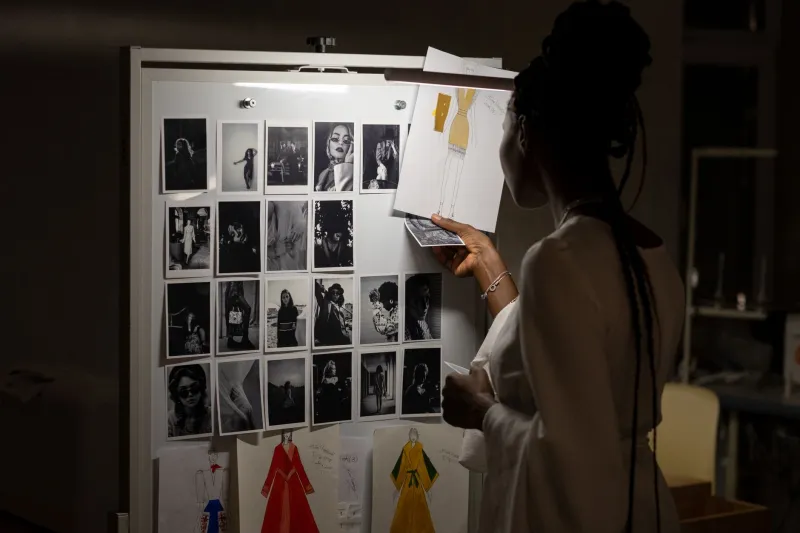
Paired with the brief, a well-built mood board is basically a visual thesis statement for your character. Not a Pinterest dump of cool-looking faces — an intentional collection of references that communicate a specific emotional frequency.
The best sculptors treat mood boards like editors treat story pitches. Every image in that board should earn its place. A photo of cracked desert clay might inform skin texture. A candid street portrait of a tired dockworker might nail the weight in your character's eyes. A vintage film still might set the entire color and lighting language before a single polygon is placed.
The psychological reason this works is pretty well documented in creative research: constraints actually unlock creativity rather than limit it. When you walk into a sculpt with a defined visual language and emotional target, your brain stops spinning in possibility-space and starts solving specific problems. That focus produces better work, faster.
Without it, you're making a thousand micro-decisions with no north star. The result is a character that feels assembled rather than inhabited.
Narrative Constraints as Creative Fuel
Here's where things get interesting for sculptors who work solo or on personal projects. The concept of narrative constraints — rules you deliberately impose on a character's world and backstory — might feel like something only writers care about. It's not.
When you decide that your character grew up poor in a fictional analog to 1970s Detroit, you've just made decisions about their teeth, their hands, their clothing wear patterns, and the micro-expressions that come from a lifetime of guardedness. You didn't have to consciously think through each of those details. The constraint generated them.
This is the technique a lot of working character artists use when they're developing original pieces for their portfolios. They're not just sculpting a cool face. They're sculpting the face of someone whose entire history is encoded in the surface. Viewers feel that history even when they can't articulate why.
Try it on your next personal project. Write two paragraphs about your character before you create a single base mesh. Not a design spec — a story beat. Where were they an hour ago? What are they about to do? What do they regret? See what that does to your decision-making once you're inside the software.
The Studio Workflow You Can Borrow Right Now
Major animation and game studios have refined this process into a collaborative ritual. Before sculpting begins in earnest, character artists sit with concept designers, art directors, and sometimes writers to align on what the character needs to communicate — not just how they should look.
That conversation produces a brief that covers:
- Emotional archetype — not just "tough soldier" but the specific flavor of toughness and what it costs this person
- Physical history — injuries, labor, lifestyle habits that leave marks on the body
- Relationship to their world — do they move through space with confidence or caution? Do they take up room or try to disappear?
- Visual contrast points — the unexpected details that make a character feel specific rather than generic
You don't need a whole studio to run this process. If you're working solo, you can interview yourself. Seriously — write out the questions and answer them in writing before you model anything. It feels a little weird the first time. The sculpts you produce afterward will feel less weird, which is exactly the point.
The Technical Payoff
All of this conceptual groundwork pays dividends in very concrete technical ways. When you understand who your character is, edge flow decisions become clearer — you know which expressions this face needs to support, so you build topology that serves those specific movements. Texture and surface work becomes more targeted. You're not adding detail everywhere; you're adding it where the story lives.
Even pose and silhouette choices sharpen dramatically. A character brief that establishes chronic lower back pain from years of manual labor produces a completely different resting stance than a character who trained as a dancer. Those aren't stylistic flourishes — they're narrative truths that make a sculpt feel like a real person rather than a beautiful prop.
Start Before You Start
The gap between technically impressive and genuinely compelling work isn't usually about software mastery or hardware specs. It's about the invisible architecture you build before the first brush stroke — the story, the constraints, the emotional target that gives all your technical skill somewhere meaningful to go.
The brief doesn't have to be long. It doesn't have to be pretty. It just has to be honest about who this character is and what they carry with them.
Get that right, and the sculpt almost tells you what it needs to become.